
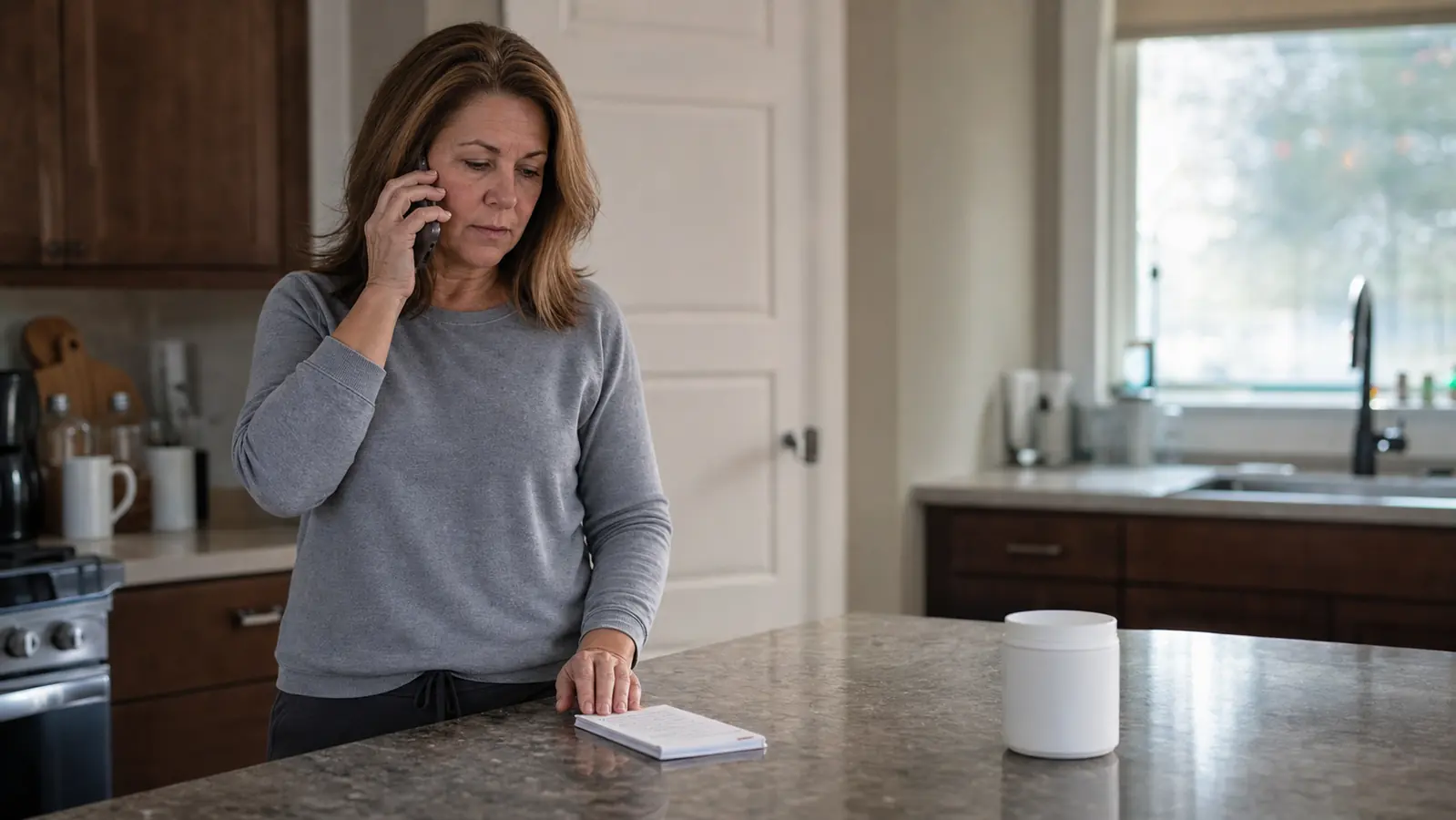
When a supplement tub showed up in my search history right after Theo's first wrestling weigh in of the season, I did the thing I always do before either of my kids gets a new bottle of anything: I made two phone calls before I made one purchase. One to their pediatrician, one to the actual trainer at Mari's club. That order is not an accident and it is not me being cautious for show. Mari is seventeen and Theo is fourteen, they are both still growing, and I am a transportation scheduler for the school district, not a nurse, a dietitian, or a sports medicine anybody. If you searched your way to this page wondering whether to add L-glutamine powder to a teenage athlete's routine, the honest answer starts before any product does, and it stays that way for longer than most articles on this topic seem willing to admit. Eventually we do get to the actual tub of Nutricost powder that ended up in our pantry, but not yet.
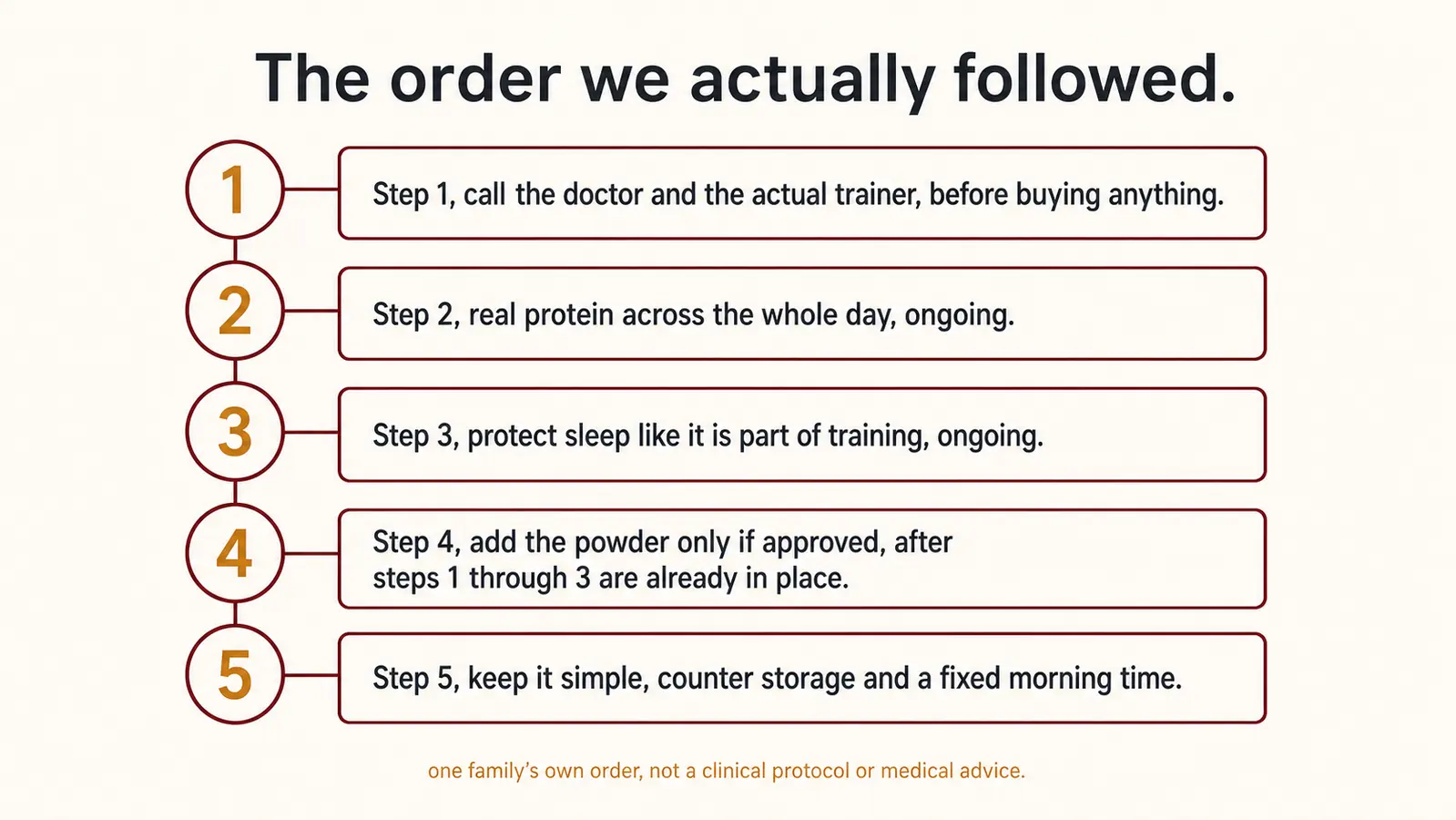
Here is the order I actually used, in the order I actually used it, not the order a bottle label would prefer. Doctor and trainer first, because that conversation catches things a parent has no way of catching alone, existing conditions, medications, an eating pattern that already worries you. Food and sleep next, because that is where almost all of the real recovery happens for a healthy, well fed teenager, powder or no powder. The glutamine itself comes last, framed the way I actually think about it, an optional habit that made mornings a little more consistent, not a mechanism that fixed anything. If you are hoping for a shortcut past step one, I do not have one to give you.
Where the Powder Actually Fits (Spoiler, Not First)
If you skip ahead, this is the product this whole routine eventually lands on, Nutricost L-Glutamine Powder, unflavored, mixed into whatever Mari or Theo already drinks. It is not a recovery fix and I am not going to tell you it is one. It is the low effort, unflavored option we landed on once the doctor conversation, the food, and the sleep piece were already handled. Today's price and the full listing are on Amazon if you want to see exactly what a hundred servings looks like before you read the rest of how we actually use it.
Amazon Check Today's Price on Amazon →Step 1: Call the Doctor and the Actual Trainer Before You Buy Anything
This step is not a caveat tucked at the bottom of the article, it is where we actually started. Before anything involving Theo's wrestling weight class or Mari's tournament schedule, I called their pediatrician and separately talked to the actual trainer at Mari's club, the one who watches her train five days a week, not me guessing from the sideline. I am not a clinician of any kind and I do not put my kids on anything without someone who is qualified signing off first. That conversation is the whole point of this step, not a formality on the way to the product.
A few things make that call non negotiable rather than optional. Any reaction to a new food or supplement, any existing condition, any medication either teenager is already taking, any concern about how much or how little they are eating, or an athlete who genuinely is not eating enough calories for their training load, all of those are a doctor's question, not a powder's. If any of that describes your athlete, the conversation with a doctor comes before anything else in this article, full stop.
This is also where I found out what an internet search cannot tell a parent, whether a particular kid's growth, weight class, or eating pattern makes an added supplement a bad idea for them specifically. Theo's wrestling weigh ins made that conversation especially important for us, since a young athlete already managing weight is exactly the kind of case where a parent should not be guessing on their own.
Step 2: Get Real Protein Across the Whole Day, Not Just After Practice
Once the doctor and trainer conversation was done, the actual work started, and none of it involved a powder yet. Total protein across the whole day matters more than anything sprinkled on top of it, and that was true for Mari's volleyball season and Theo's wrestling season both. A teenager who trains hard and only gets real protein at dinner is working against themselves no matter what sits in the pantry.
For us that meant boring, practical changes. Eggs at breakfast instead of just cereal before a Saturday tournament. A real protein source in the lunch Mari packs for school, not just crackers and fruit. An actual dinner on weeknights instead of whatever was fastest after Theo's practice ran late. None of this is exciting to write about, and that is exactly the point, it is also the part that moves the needle for a growing athlete more than anything measured in a scoop.
Hydration turned out to be the piece I almost left out of this list, and probably should not have. Between six hours in a rec center gym and a wrestling room that runs hot, both kids finish practice or a match already behind on water, and no powder makes up for that. I keep a case of water in the Pilot from August through November for exactly this reason, because a dehydrated, under fed teenager feels worse the next morning than an under supplemented one ever will.
If your athlete already eats and drinks like this, consistently, across the whole week and not just the day after a tournament, that matters for the rest of this article. A well fed, well hydrated teenager is exactly the population where the evidence on glutamine gets thin, which I will get to honestly further down.
Step 3: Protect Sleep Like It Is Part of Training
Sleep was the second unglamorous piece, and it was harder for us than food, mostly because of the schedule. Mari's club tournaments run Saturday, three to five matches in a rented rec center gym, and Theo's wrestling season means early weigh ins with long gaps between matches. Both eat into normal sleep, and neither teenager was going to fix that on their own without me making it a house rule.
What actually helped was boring too, a real bedtime the night before a tournament or a meet, not a phone lit hour past it, and treating the Sunday after a hard Saturday as a day for extra sleep, not a full stop on the couch. I am not going to pretend I have this perfected, especially with Theo, who will stay up too late every single time I do not physically take the phone away. But sleep does more for how a teenager feels and performs than anything else I have tried, powder included.
We also stopped treating naps like something only little kids need. A twenty minute nap on the drive home from a Saturday tournament, or right after school on a heavy wrestling practice day, made a bigger difference for both of them than I expected. It is not a replacement for real nighttime sleep, and Theo will still tell you he does not need it, but I have watched him fall asleep in the car more Saturdays than not, and I have stopped waking him up for it.

Step 4: If You Still Want to Add It, Keep the Powder Itself Simple
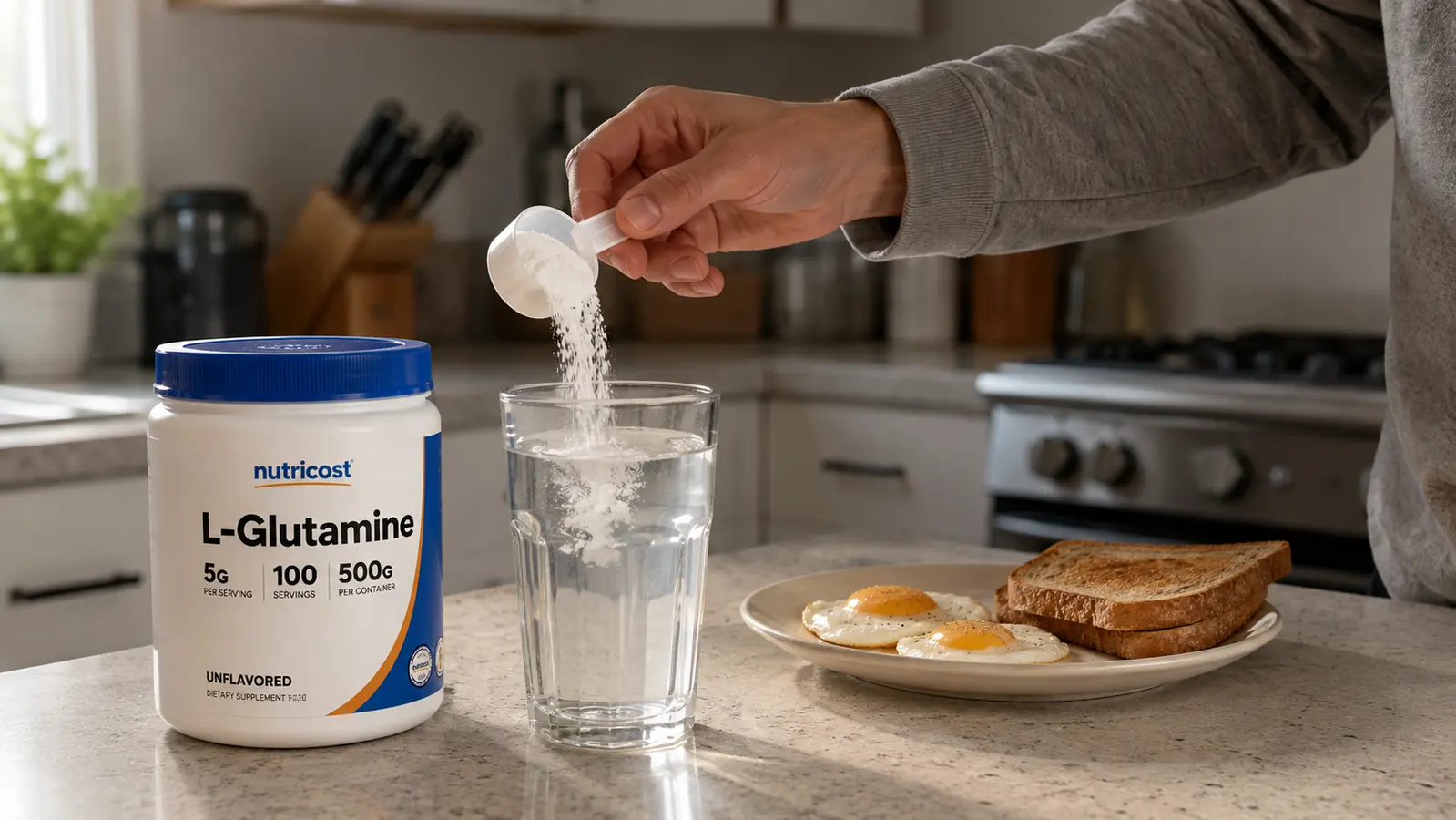
Once the doctor conversation, the food, and the sleep were actually in place, and only then, we added the Nutricost L-Glutamine Powder to Mari and Theo's routine. I want to be straightforward about why this specific product and not louder claims elsewhere. It is unflavored, which meant it disappeared into whatever they were already drinking instead of becoming its own production, and a hundred servings meant I was not restocking every few weeks in the middle of a season.
The mechanics matter more than the product here. We mix it into a glass of water or into whatever protein shake is already part of the morning, not something new to remember on top of everything else. Consistency, not the specific brand of powder, is what makes a habit like this stick for a teenager who already has practice, homework, and a bus schedule to think about.
I want to be honest about the evidence here too, because I would want someone to tell me straight. For a healthy, well fed teenager who is already eating enough protein and sleeping reasonably well, which is the situation we were actually in, the research on glutamine is mixed and mostly unimpressive. It is not a recovery accelerator, it does not prevent soreness, and it does nothing for a teenager's immune system that food and sleep were not already doing better. We use it as a habit anchor, not a mechanism, and I would not want a reader walking away thinking otherwise.
Step 5: Build It Into a Routine That Survives an Actual Season
The last piece was making it boring enough to actually stick. We keep the Nutricost tub on the kitchen counter next to the coffee, not in a cabinet, because anything that requires opening a cabinet door at six thirty in the morning before a bus route does not survive a real season in this house. Mornings before school are when it actually gets used, mixed in fast, no measuring drama, before the day gets away from anyone.
Storage sounds like a small detail until you have left a tub of anything in a hot car for two days during a tournament weekend, which we have done with worse things than a protein powder. It lives in the pantry, not the Pilot's hatch with the chairs and coolers, and it does not ride along with the ice packs on Saturdays.
And the stop and ask points stay the same the whole time we use it, not just at the start. Any new reaction, any change in an existing condition, any new medication, any concern about how Mari or Theo is eating, or an athlete who stops eating enough, any of that means a call to the doctor, not doubling down on the Nutricost powder. That has not happened for us, but I would rather write that sentence than pretend it could not.
What Else Helps
None of this replaces an actual conversation with your athlete's doctor, and none of it replaces the trainer who watches them train in person. If you want the fuller comparison of glutamine against another option parents ask me about, I wrote that up in glutamine versus BCAA for teen athletes, and the more unfiltered version of what I would actually tell a friend before they buy it is in the honest review. Both go further into who this genuinely helps and who can skip it without losing anything.
One more honest note before you go shopping. If either of your kids takes any regular medication, ask the pharmacist or the prescribing doctor specifically about any supplement you are considering, glutamine included, rather than assuming a scoop of powder is automatically fine just because it does not require a prescription. That five minute question costs nothing, and it is the kind of step that is easy to skip when everyone in the house is tired and just wants to move on to the next thing on the calendar.
The Nutricost tub sits on our counter because the doctor call, the food, and the sleep already happened. It is the last step in this routine, not the first one, and it stays that way on purpose.
Only After the Free Stuff Is Handled
If your athlete's doctor and trainer are already on board, and the food and sleep piece is already solid, Nutricost L-Glutamine Powder is the low effort, unflavored option we settled on for the last step. It will not speed up anyone's recovery on its own and it is not a substitute for any of the steps above. It is just one small, consistent habit riding on top of everything that actually matters.
Amazon Check Today's Price on Amazon →