
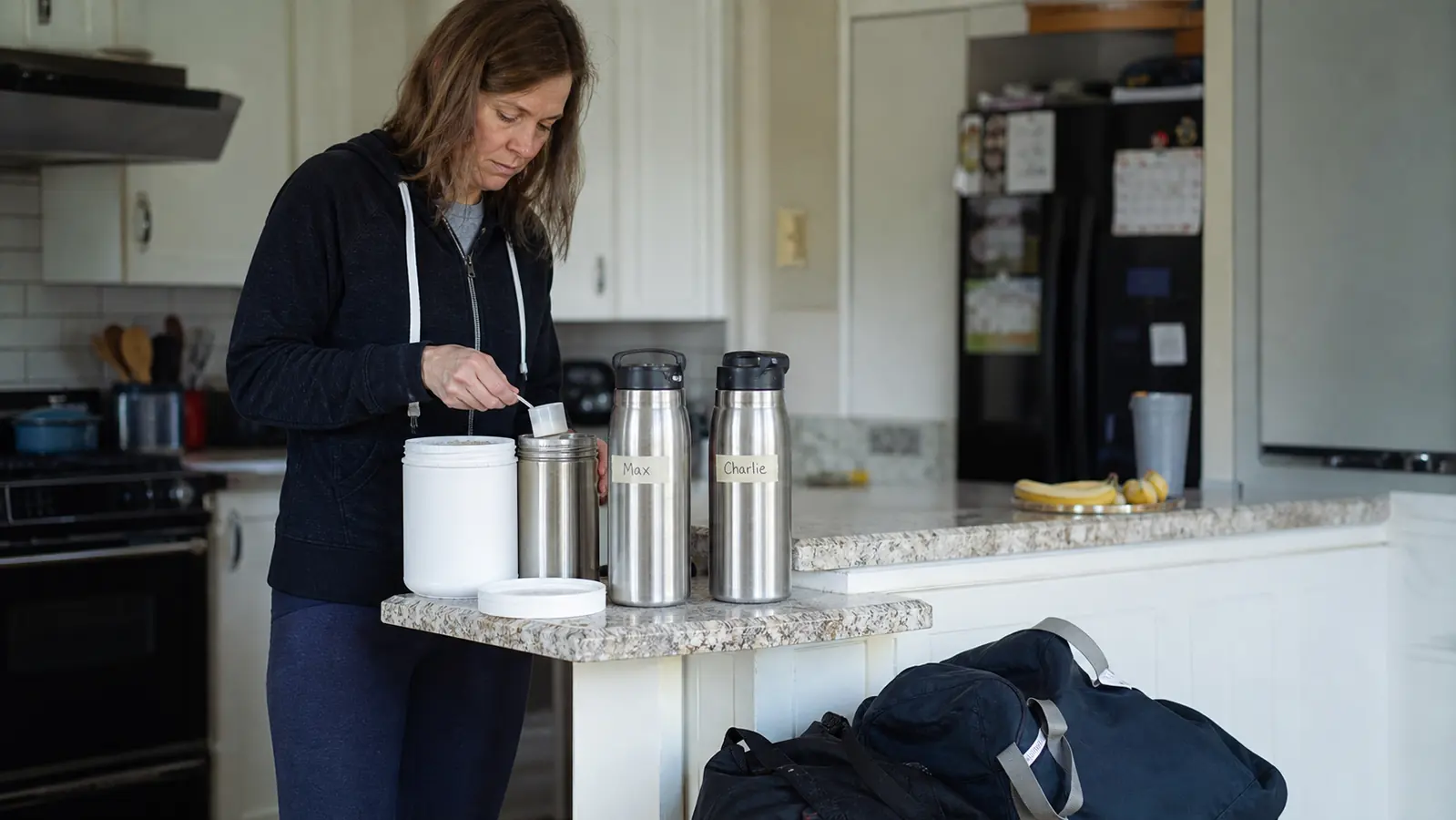
The recommendation came from Denise, another club volleyball mom, in the team group chat after a five-match Saturday in Loveland last spring. Mari was seventeen, she'd played setter through four full matches and a tiebreaker, and by the time we loaded the Pilot her hands were stiff and she said her legs felt hollow in a way that wasn't just tired. Denise swore by a powder her son's baseball team all used. I didn't buy anything that night. But two weeks later, after watching the same slump happen again on a different Saturday, I finally ordered a jar of Nutricost L-Glutamine Powder.
The Quick Verdict
A cheap, easy to mix amino acid powder that probably isn't doing much for a healthy teenager who's already eating enough protein, but it isn't hurting anything either, and some habits earn a spot in the routine for reasons that have nothing to do with the ingredient list.
Amazon Check Today's Price →Before You Read Another Word, Here's What This Actually Is
Nutricost's L-Glutamine Powder is a plain, unflavored amino acid supplement. Nothing more. If you'd rather see the current listing and serving count on Amazon before I walk through what it does and doesn't do, here's where I'd look.
Amazon Check Today's Price on Amazon →What Actually Happened When We Tried It
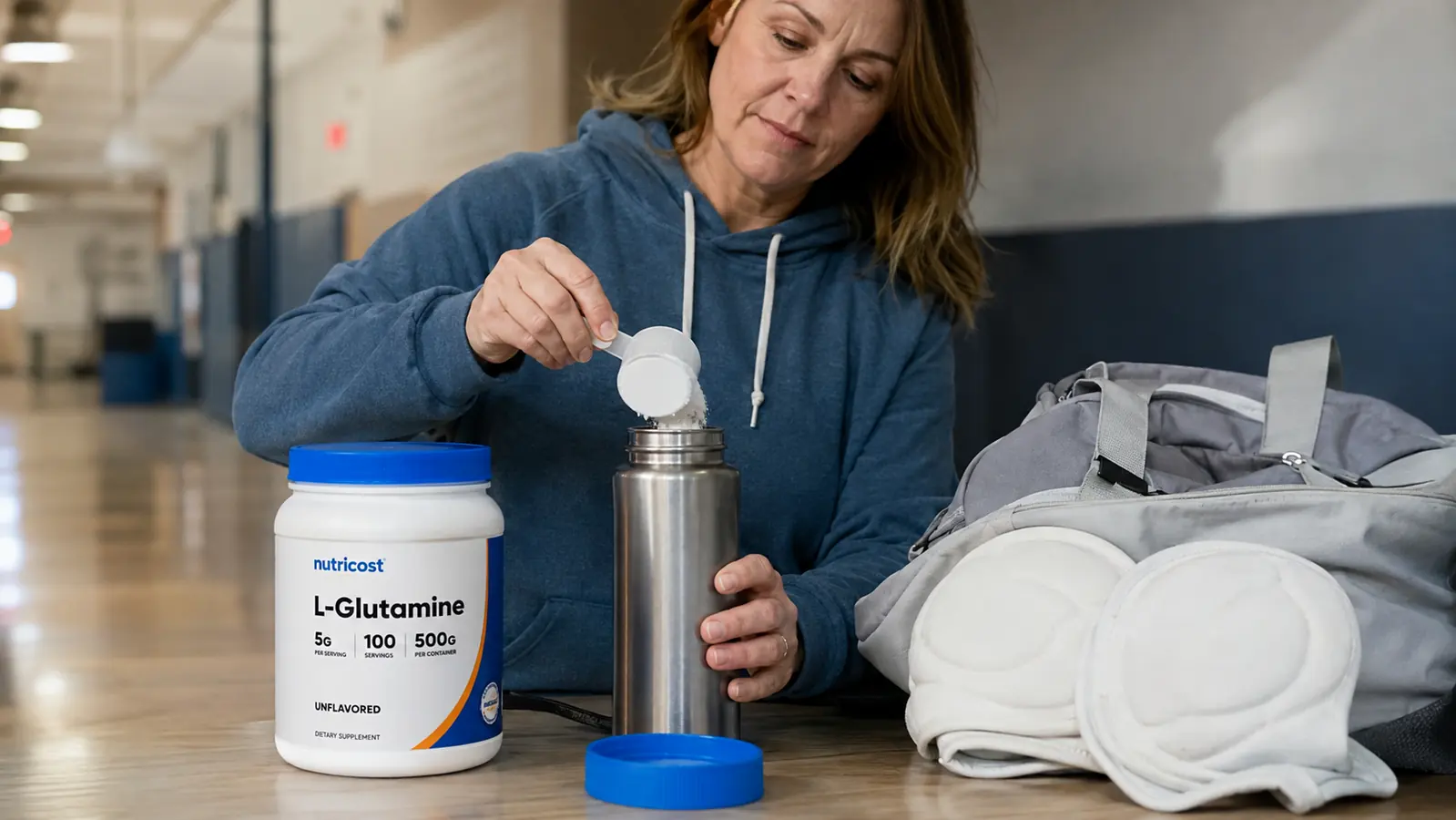
The routine was simple. A scoop of Nutricost went into Mari's water bottle before Saturday tournaments, and sometimes Theo's too, once wrestling season started and the gaps between his matches got long enough that he was sitting around a gym for two or three hours doing nothing but drinking water and watching other brackets. I mixed it myself the first few weeks, then handed the scoop over once they both had the routine down. It became part of packing the gym bag, the same way the ice packs and the extra socks are part of packing the gym bag.
Here's the honest part. I didn't see anything dramatic. Mari still had stiff hands after a five-match day. Theo still complained about his legs feeling heavy during the second half of a weigh-in week. Nobody bounced back looking like a different kid. What I noticed instead was smaller and harder to credit to a supplement at all: the water bottles got finished more often because there was something in them worth drinking, and the routine of mixing it up before a tournament became a little pre-game ritual Mari does without being told, the same way she taped her fingers before every match without me reminding her. I wrote up the full six month log, match by match, in a longer piece if you want the day-by-day version: our long-term Nutricost review.
I also want to be clear about what I did not track, because it matters. I never had either kid's blood drawn, never ran a controlled week with the powder against a week without it, and never separated out how much of any change was the glutamine versus the fact that a fourteen year old naturally gets stronger and more used to a long tournament day over a season regardless of what's in his water bottle. Any parent selling you a clean before and after from one season with two kids is skipping that part on purpose.
This is one family. Two kids, one volleyball season and one wrestling season, no control group, no lab work. I want to say that plainly before anything else, because it's the honest starting point for everything below.
What the Research Actually Says
L-glutamine is a nonessential amino acid, which is a clinical way of saying a healthy body already makes plenty of it and gets more from ordinary food. Most of the research showing a real, meaningful benefit from supplemental glutamine comes from contexts that have nothing to do with a seventeen year old setter or a fourteen year old wrestler: severe burns, major surgery, intensive care patients, and people with gut conditions like Crohn's disease where the body's normal supply and demand is genuinely disrupted. That's a different population with a different problem, and the results from those studies don't transfer over just because both groups are technically human bodies under stress.
For healthy, well fed people doing normal exercise, the picture is much less exciting. The studies that exist on glutamine, muscle soreness, and exercise recovery in healthy athletes are mixed, and a lot of them show no meaningful difference from a placebo once the person's regular diet is already covering their protein needs. I'm not a researcher and I'm not going to pretend I read every paper cover to cover, but the pattern that kept showing up when I looked into it was consistent: strong effects in sick or injured people, weak or absent effects in healthy people who eat enough. Mari and Theo are the second group, not the first, and so is probably the kid on your own team who's been handed a scoop of something because it worked for somebody's cousin who plays college ball.
What the Label Can't Actually Promise You
Amazon listings and supplement marketing in general lean hard on words like recovery, immune support, and gut health, and technically none of that is a lie exactly, it's just borrowed from research done on people in a hospital bed, not a kid on a gym floor. A jar doesn't have to prove any of those words apply to your specific fourteen year old before it gets to print them on the label. That's not a Nutricost problem specifically, it's how the whole supplement category is allowed to talk, but it's worth saying out loud because it's exactly the gap between what a jar implies and what a healthy household should actually expect.
So no, I'm not going to tell you this powder speeds up recovery, prevents soreness, or boosts anybody's immune system, because I don't think the evidence for a healthy teenage athlete supports saying that, and I'm not a doctor or a nutritionist qualified to make that call anyway. What I can tell you is what it is: an unflavored amino acid, mixed into water, that became part of a tournament day routine in our house.
The Protein and Sleep Math Nobody Wants to Do
Here's the math I eventually sat down and did, because it changes the whole conversation. Mari eats eggs most mornings, chicken or ground turkey at dinner most nights, and a protein shake after some practices because her club's actual trainer, not me, put that in writing for the team. Theo eats like a fourteen year old boy in wrestling season, which is to say constantly, and mostly protein heavy food because cutting and maintaining weight makes everyone in that house pay attention to what's on the plate. Both of them are almost certainly getting plenty of glutamine already from chicken, beef, eggs, and dairy, the same way most people who eat a normal amount of protein are. A scoop of powder on top of that isn't filling some gap, because there isn't much of a gap to fill.
Sleep matters more than any of this, and it's the harder problem to solve with a jar. Theo's wrestling weeks have brutal gaps between weigh-in and his first match, and those late nights do more to how he feels the next day than anything in his water bottle. Mari's Saturday tournaments start early and run long, and the week she's short on sleep is the week she looks and moves worse regardless of what she drank between matches. If I'm being honest with myself, total protein intake and sleep were doing the real work the whole time, and the powder was, at best, a side character in a story where those two things were the leads.
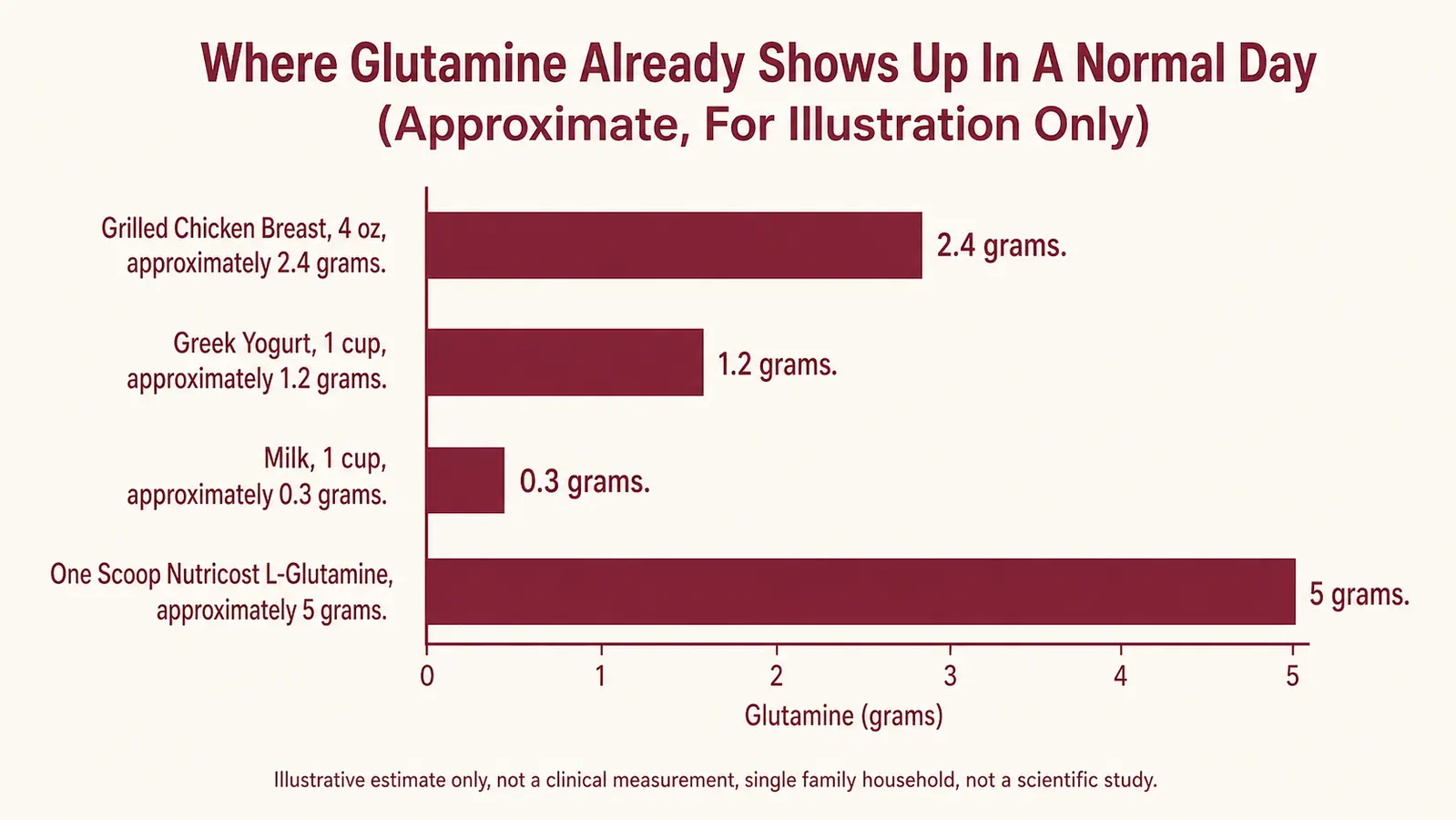
I put together a rough chart of where glutamine already shows up in an ordinary day of eating, just from food, without touching the jar at all. It's not a lab measurement, it's a household illustration, but it's enough to make the point: a normal serving of chicken or yogurt or milk is already contributing something, and a family eating reasonably well starts most days already ahead of where a single scoop can meaningfully move the needle.
The Parts Nobody Tells You: Mixing, Taste, and the Jar in the Cabinet
Nobody puts this part in a review. Unflavored still tastes like something, a faint, slightly bitter edge that Theo noticed the first sip and never fully stopped mentioning. It mixes fine in warm water if you shake it hard enough, but toss it into a cold water bottle and give it a lazy half-shake and you get a layer of undissolved powder sitting at the bottom that nobody wants to drink by the third gulp. Mari eventually started stirring hers into a post-practice smoothie instead of a straight water bottle, which solved the taste and the clumping in one move, but that's a workaround I figured out by trial and error, not something the label walked me through.
The scoop itself is another small annoyance worth naming. It's an honest, plain plastic scoop, but it's easy to overfill or underfill by eye, especially when a teenager is packing a bag in a hurry before school and just wants the thing done. I started keeping the scoop level with the back of a butter knife the way you'd level flour for baking, which sounds fussy, but it's the only way I found to get anything close to a consistent serving out of it.
The other honest problem is compliance, which is a fancy word for the tub sitting half used in the cabinet for three weeks because everyone forgot about it during a slower stretch of the season. If you compare the Nutricost tub to some kind of quick shot or single-serve packet, this loses on convenience every time. It's a scoop and a shake, and a scoop and a shake is exactly the kind of small extra step that gets skipped on a rushed morning. If you want to see how it stacks up directly against another popular amino acid option, I put together a full head-to-head here: L-Glutamine vs BCAA for teen athletes.

Who's Actually Wasting Their Money
If you're buying this expecting less soreness, faster recovery, or some kind of immune boost for a healthy kid who already eats reasonably well, I think you're going to be disappointed, because that's not what the evidence for this population actually supports. And if your household is already dialed in on protein at meals and a decent sleep schedule, a scoop of glutamine on top of that isn't adding much you don't already have. That's the group I'd tell to save the money, or at least not expect anything measurable from the jar.
I'd also put in the same category any family reaching for this instead of dealing with the harder, less convenient stuff, a kid who skips breakfast, a bedtime that keeps slipping later during a busy week, meals that are more convenience food than protein. A jar in the cabinet feels like doing something. It's a lot less effort than fixing a sleep schedule or planning meals around a tournament weekend, and that's exactly why it's tempting to lean on it instead of the harder changes that would actually matter more.
What I Liked
- Mixes into a water bottle without much fuss once you shake it well
- Unflavored, so it doesn't fight with whatever drink or smoothie it's going into
- The tub lasts most of a season with one or two people using it
- Nutricost lists a plain ingredient panel, nothing hidden in a proprietary blend
- Easy habit to build around the start or end of practice
Where It Falls Short
- The evidence for healthy teenage athletes is thin, most of the meaningful research is in clinical settings that don't apply here
- Unflavored still has a faint bitter edge some kids notice right away
- Clumps if you don't mix it fast in cold water
- Easy to forget about in the bag or fridge until the tub goes stale
- Total protein intake and sleep do more of the real work, so this is a supporting habit at best, not a fix
If Mari's plate already has enough protein on it, I don't think a scoop of amino acid powder is what stands between her and feeling less wrecked on Sunday morning.
Who This Is For
Families who already have protein and sleep mostly handled and just want a simple, cheap habit to anchor a tournament day routine, one that isn't going to hurt anything and gives a kid something to do with a water bottle between matches. Danny mixes a scoop into his water on longer delivery routes too, not because I think it's doing anything special for a grown man's shoulder, but because it's one more thing that gets him drinking water on a truck where he otherwise forgets to. If that's the bar you're setting, a plain, honestly labeled jar like Nutricost's clears it fine.
Who Should Skip It
Skip it if you're hoping it substitutes for eating enough protein or getting enough sleep, or if you're expecting less soreness, faster recovery, or an immune boost, because that's not what the evidence for a healthy teenager supports. And I'll say this plainly since it matters more than anything else in this review: teenagers and supplements are a conversation for a doctor or the team's actual trainer, not a mom reading Amazon reviews at eleven at night. I don't put Mari or Theo on anything based on my own judgment alone. Before either of them touched this jar, I ran it by Mari's club trainer, and I'd tell any parent reading this to do the same before deciding it's right for their own kid.
If You Want to See What's In the Jar
That's the honest version, no dramatic before and after, no miracle claim, just a plain amino acid powder that earned a small, unglamorous spot in our gym bag routine. If you want to check current pricing and servings for Nutricost's L-Glutamine Powder, here's the listing.
Amazon Check Today's Price on Amazon →