
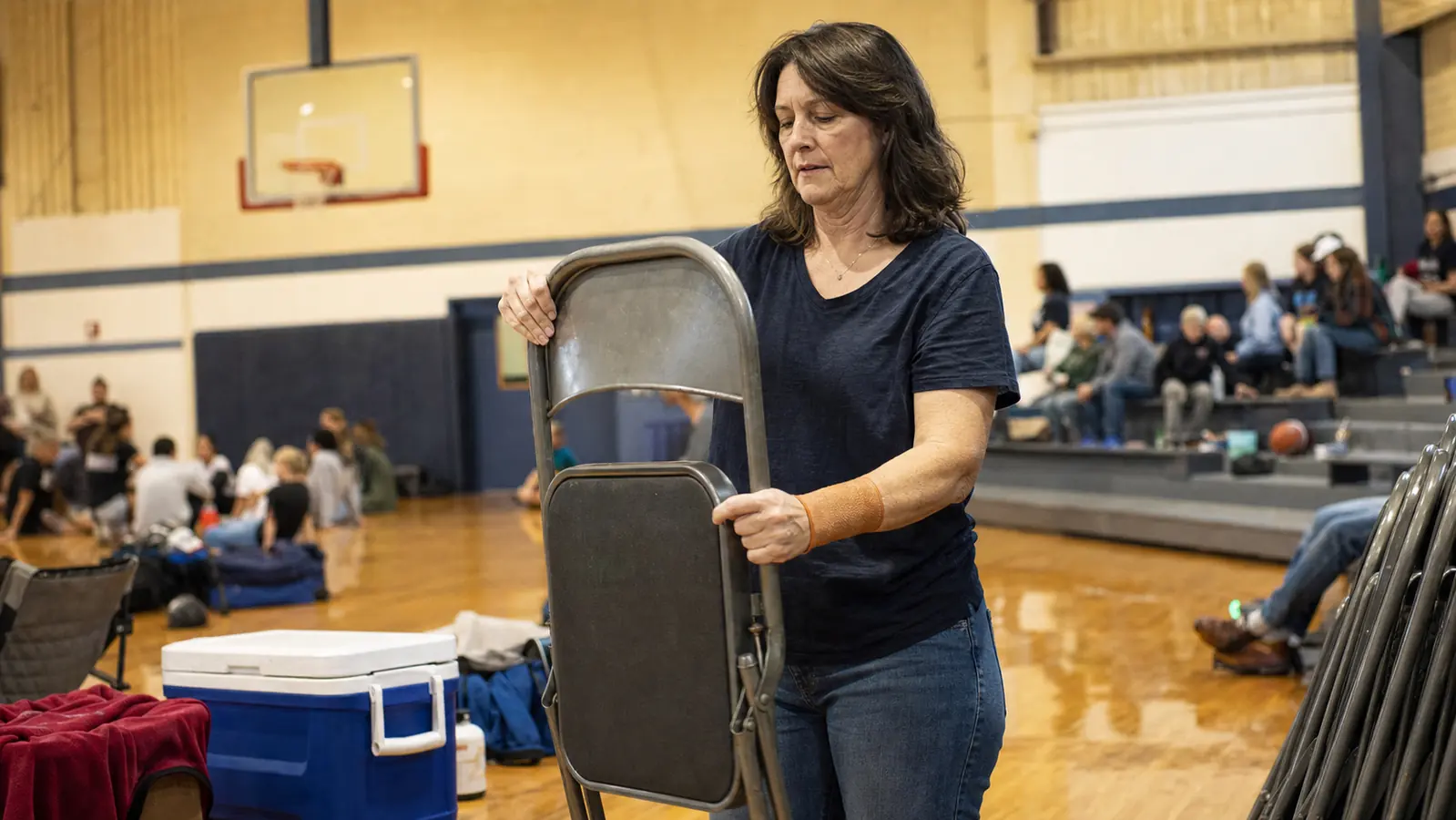
By the middle of the volleyball season last spring, my hands were the thing complaining first, not my hip. Eleven years of hauling the ice chest and snapping folding tables open and shut will do that to a person's wrists and forearms, and last April mine finally said something about it, a dull ache across both wrists that showed up by the second match and hung around into Sunday. A woman on the tournament committee, who has run these gyms as long as I have, pulled her sleeve down over her wrist between matches and told me she had been wearing a pair of copper compression sleeves under her jacket all season. I ordered a pair that night from the bleachers, and it turned out to be the INDEEMAX copper wrist compression sleeve, the same pair that has been in my tournament bag, and in Danny's truck cab, ever since.
That was close to ten months ago now, spring clear through the tail end of Theo's wrestling season this winter, which in our house means it has survived a full club volleyball season, most of a wrestling season, and every load in and load out of chairs and coolers in between. I want to be upfront that I am not a physical therapist, a hand specialist, or any kind of clinician, and nothing here is meant to diagnose what is actually going on in anyone's wrist. This is one family's honest account, two people's wrists across ten months, of what a compression sleeve did, and did not do, across ordinary hand and forearm strain from hauling gear and driving a route, not from a specific injury.
The Quick Verdict
Ten months in, the INDEEMAX sleeve has earned a permanent spot in my tournament bag and Danny's truck door pocket. The compression genuinely helps tired hands get through a long day. The copper claim on the label does not hold up to what I have read, and I say so plainly below.
Amazon Check Today's Price →Hands Aching by the Third Match, Every Single Saturday?
The INDEEMAX sleeve slides on in seconds and does not need a trip to the freezer the way our ice roller does. See today's price and current availability on Amazon.
Amazon Check Today's Price on Amazon →How I've Used It
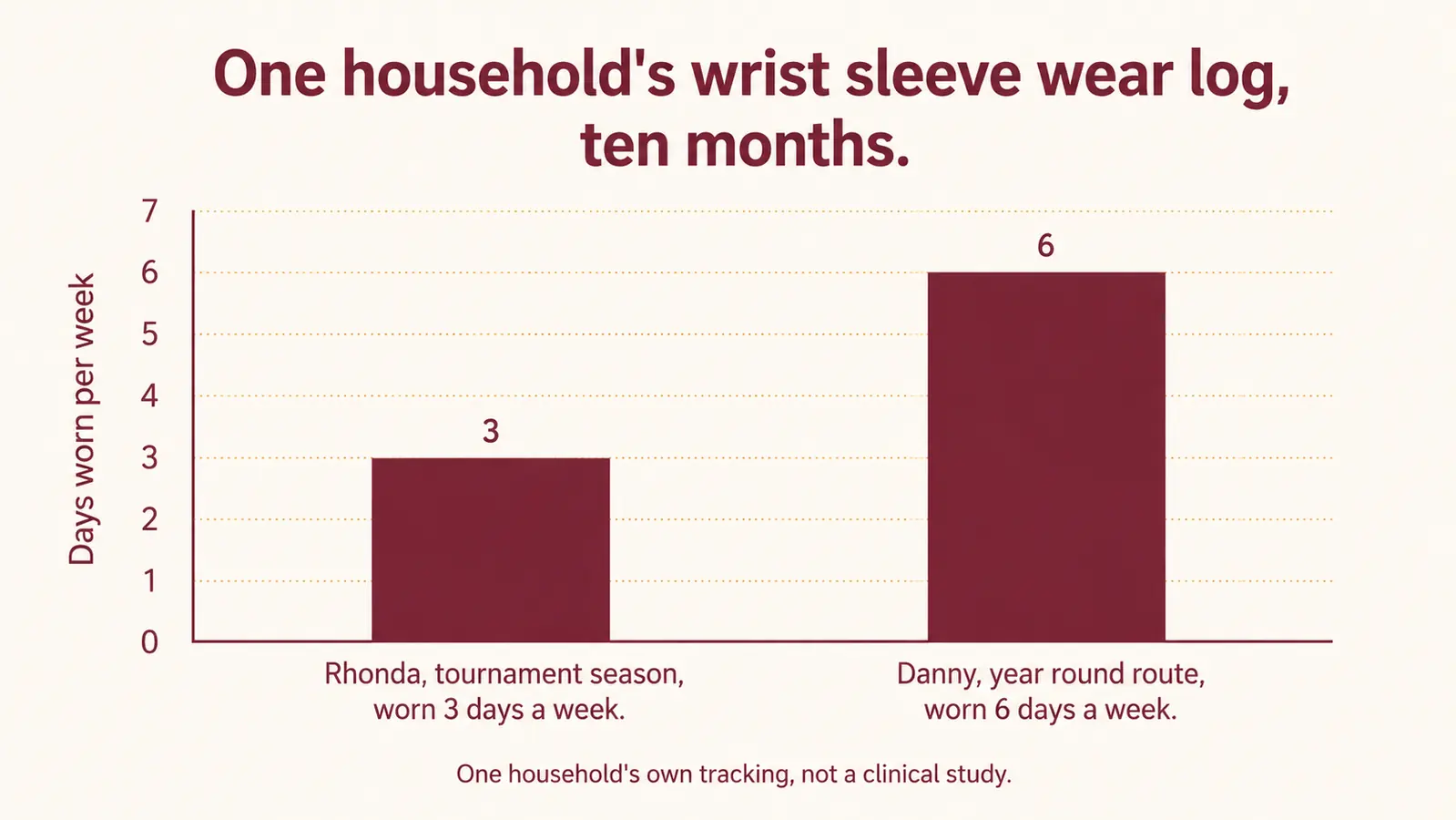
Mine goes on somewhere around the third or fourth match of a Saturday, usually right after I've hauled the ice chest out to refill it and my grip has started to feel loose and tired, less like pain and more like my hands just do not want to close all the way. I pull the INDEEMAX sleeve over my wrist, tuck the thumb loop over my thumb so it does not slide down while I am folding chairs, and leave it on through the drive home. It does not make the ache disappear. It makes my hands feel supported instead of just tired, which after eleven years of tournament Saturdays is a real difference even if it is a modest one.
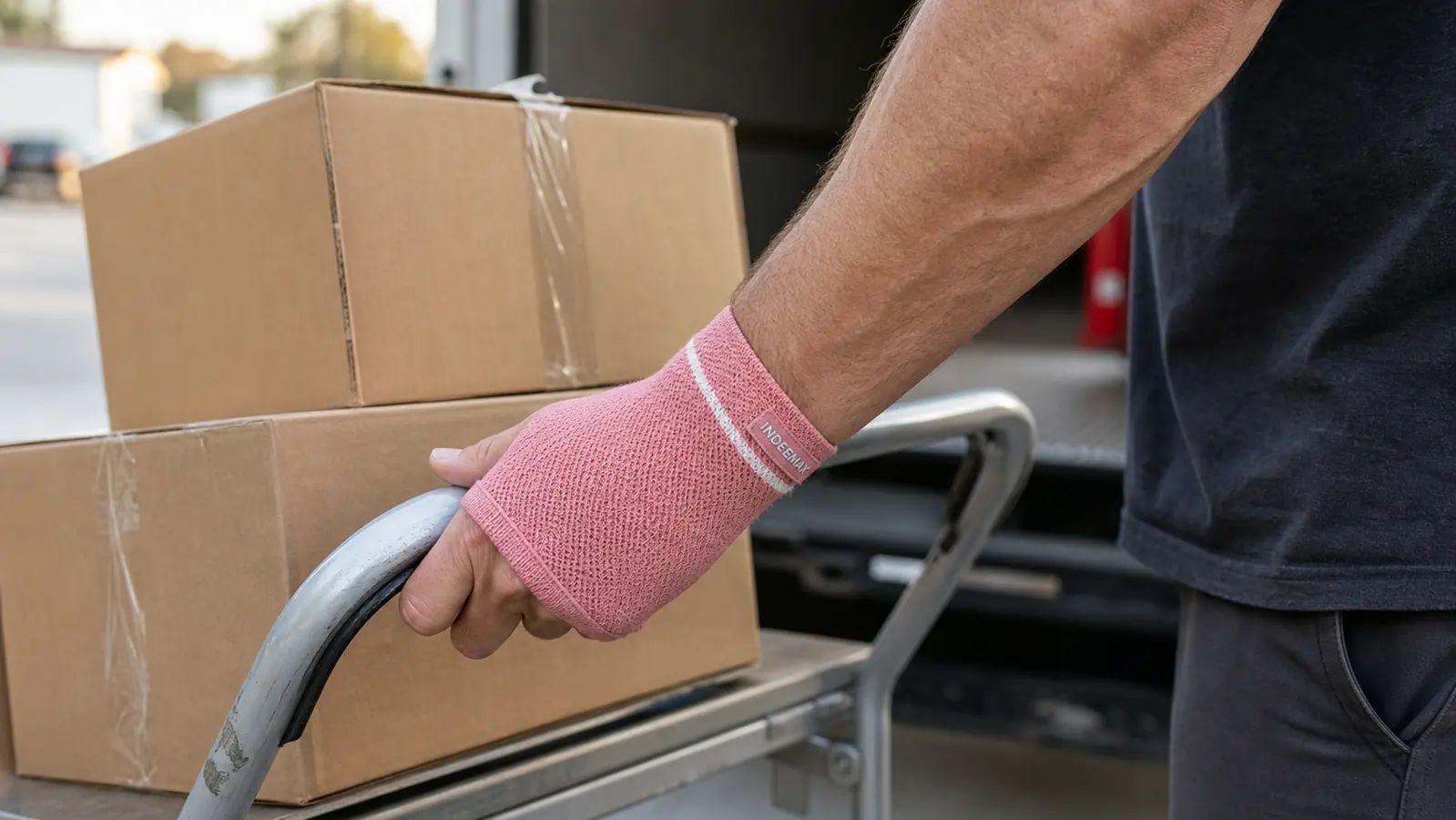
Danny wears his in the truck, usually the second half of his route once his hands start cramping around the hand truck handle from hours of gripping and letting go, gripping and letting go. He keeps a pair in the glove box now and pulls them on for the last few stops, then leaves them on for the drive home same as I do. He will tell you it takes the edge off without fixing anything, and coming from a man who will not go see a doctor about his shoulder until I make the appointment myself, that is about as much credit as he hands out to anything.
What's Actually in the Design
The INDEEMAX sleeve is a snug knit pull on, copper infused nylon and spandex with a thumb loop at one end so it stays put on your hand instead of riding up your forearm. There is no strap and no velcro, nothing to adjust, you just pull it on and it does its job through even, consistent pressure across the wrist and the base of the palm. It is thin enough to wear under a jacket sleeve or a work glove, which is the whole reason it made it into Danny's glove box in the first place. It comes as a pair, one for each hand, which matters in our house since both of us wear one.
Here is the part I want to be straight about, because the packaging leans hard on it. There is no good evidence that copper infused fabric does anything on its own beyond what a plain compression sleeve does. I looked into this after we had been using ours a couple months, because the label talks about copper the way people used to talk about magnets in shoe insoles, and what I found is that the actual research behind copper compression wear is thin and mostly inconclusive. What is doing the real work here is the compression itself, the steady pressure holding the wrist and the small muscles in the hand, and that mechanism is real but modest. It eases the ordinary tiredness of a long day of gripping and hauling. It is not some special metal doing something a plain sleeve could not. I go into more of the specific week by week ups and downs, including a few things I would change, in my fuller honest review of this same sleeve after a full season.
What Washing and Months of Wear Actually Did
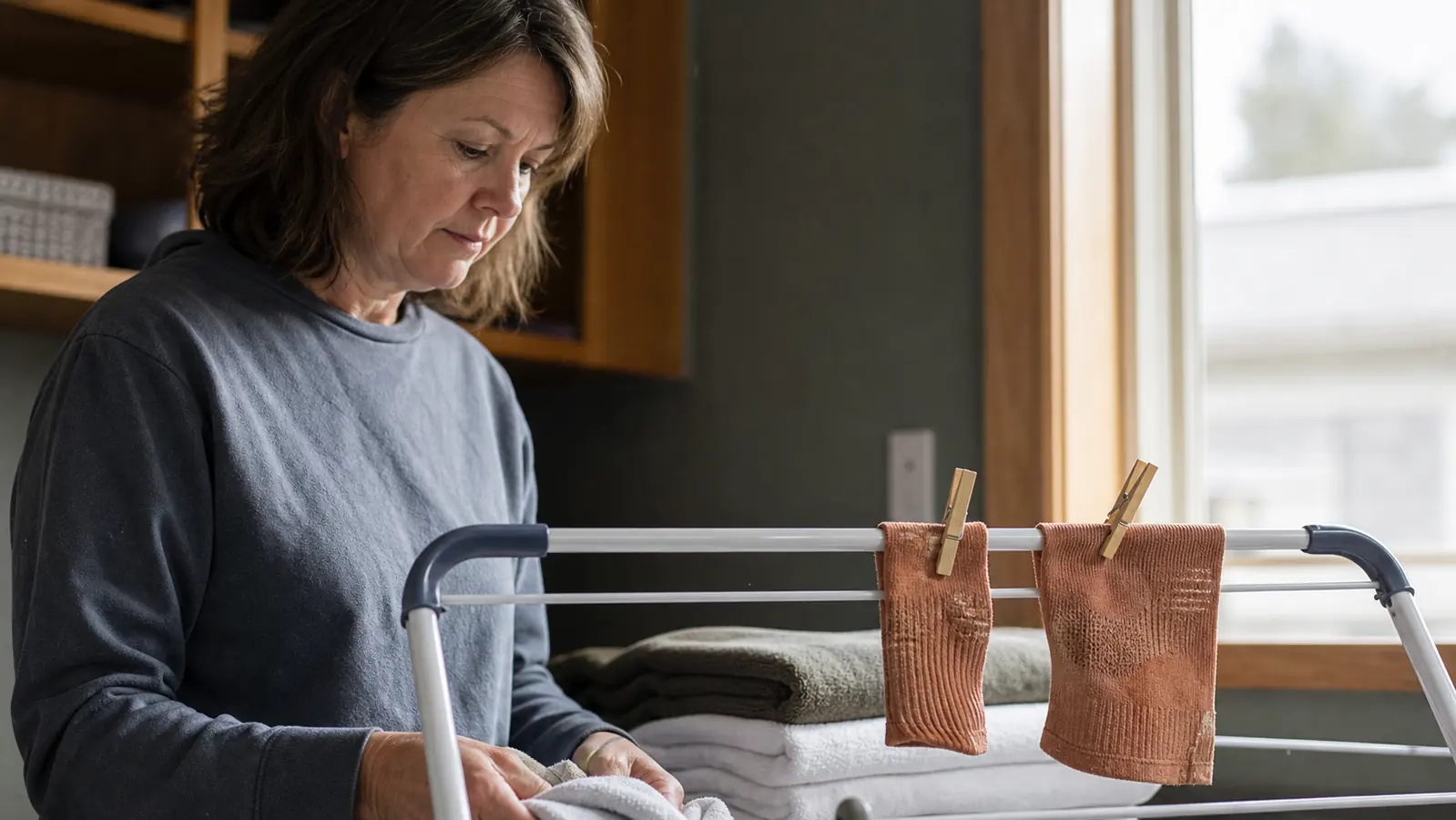
Both of ours go through the wash most weeks during season, tossed in with the towels since they are small enough to get lost in a regular load. I have lost count of the actual number by now, somewhere well past thirty washes on mine and probably close behind on Danny's, since his sees more days of use per week than mine does outside of tournament season. The compression has held up better than I expected. Neither sleeve has gone loose or baggy the way an old sock does after enough trips through the dryer, and the thumb loop stitching on both pairs is still intact.
What did change is the color and the edge of the cuff. Mine has faded from a deep copper gray to something closer to a pale charcoal, and the top edge of Danny's, the one he pulls on and off with work gloves already on, has started to curl slightly instead of lying flat. Neither of those things affects how it works, but I would be lying if I said they look the same as the day they arrived. The one real functional change is that mine feels a hair looser than it did in April, not loose enough to stop wearing it, but enough that I notice it by the second or third wear after a wash, before the fabric tightens back up again. Danny's shows the same pattern on a slower timeline, since a delivery route wears differently on fabric than a tournament Saturday does.
Who It's Actually Helping
For me, the sleeve is doing its most work on the days I am hauling gear in and out of the Pilot's hatch, folding and unfolding chairs, and handing out water bottles and snacks for six hours straight. It is not fixing whatever is actually going on in my wrists after eleven years of this, and I have never asked it to. It is taking some of the strain off a grip that is already tired by the second match, which is the only claim I am comfortable making about it. I laid out the specific moments it earns its keep by situation, from folding tables to Danny's hand truck, in 10 reasons a wrist sleeve earns its spot after hauling coolers.
For Danny, it is doing similar work on a completely different kind of day, hours of gripping a hand truck handle, opening and closing a truck door, signing an electronic pad with a stylus his hand barely wants to hold by four o'clock. He is not dealing with a diagnosed wrist injury any more than I am. This is the ordinary wear of a job that asks the same small muscles to do the same motion over and over, all day, every day, and he has said more than once that the sleeve is the one thing in his truck he actually remembers to grab.
Where It Falls Short
It runs warm. Both of ours get noticeably sweaty inside by the second hour of wear, which is more of a problem in July at an un-air-conditioned rec center gym than it is in a cool truck cab in December. If your hands already run hot, that is worth knowing before you commit to wearing one all day. The one size stretch fit also means it is genuinely one size, not one size fits most, and Danny's runs snugger on him than mine does on me even though we bought the same pair, which meant a short break in period before he stopped noticing it was even there.
And I want to say this plainly. If what you are dealing with is real, ongoing wrist pain, numbness, tingling, or anything that does not ease up with rest, a sleeve is not the answer and I would never suggest it stands in for an actual diagnosis. Danny and I are both dealing with the ordinary strain of physical days, not an injury, and if either of us started seeing something beyond that, the next call is to a doctor, not to Amazon. I am not a clinician and I do not pretend to be one.
What Else We Tried
Before this we tried a stiffer wrist brace from the drugstore, the kind with a metal splint down the palm, and it did more sitting on a nightstand than it ever did on Danny's hand, mostly because it was too rigid to wear while he was actually working, gripping a hand truck or signing for a delivery. We also tried plain fingerless compression gloves for a while, which worked fine for me at the snack table but did nothing for the actual wrist, just the fingers and knuckles, and Danny would not wear his because they made the steering wheel feel strange in his hands.
The INDEEMAX sleeve is the first thing that has held up to actual daily wear without getting in the way of using our hands for the thing that tired them out in the first place. That is not a small bar to clear after eleven years of trying whatever the other team moms swear by, but it is the one this sleeve actually cleared.
What I Liked
- Slides on in seconds, no freezer time and no charging like some of the other gear in our tournament bag
- The compression itself genuinely takes the edge off tired hands after hours of gripping and hauling
- Thin enough to wear under a jacket sleeve or work gloves without anyone noticing
- Held up through more than thirty washes without going loose or baggy
- Comfortable enough that Danny actually remembers to put his back on for the drive home
Where It Falls Short
- Runs warm, noticeably sweaty by the second hour in an un-air-conditioned gym
- One size stretch fit runs snugger on some hands than others, even within the same pair
- The copper infusion is mostly a marketing claim, plain compression is doing the actual work
- Cuff edge starts to curl after enough wear and washes, purely cosmetic but noticeable
- Does nothing for an actual wrist injury, only ordinary strain from a long physical day
It is not fixing whatever eleven years of hauling ice chests has done to my wrists. It is making the last two hours of a six match Saturday feel a little less like my hands have quit on me.
Who This Is For
If your hands and forearms take the same kind of daily beating mine do, ice chests, folding tables, gripping a steering wheel or a hand truck for hours at a stretch, this earns its spot in a bag or a glove box the same way it earned its spot in ours. It is also worth trying for anyone who wants relief from ordinary hand fatigue without wearing something bulky or having to remember to freeze it the night before, and it works just as well for anyone whose hands get tired from a long day of gripping, lifting, and carrying as it does for ours.
Who Should Skip It
If you are dealing with a real wrist injury, diagnosed carpal tunnel, or pain that does not ease up with rest, this is not a substitute for seeing a doctor, and I would never suggest otherwise. I am not a clinician, and neither is anyone else at our tournament table. If you are buying this expecting the copper to do something a plain compression sleeve would not, I would rather you know that now than find out after it arrives.
Still Reaching for Something by the End of Every Long Day?
Ten months later, this sleeve is still in my tournament bag and still in Danny's glove box. Check today's price on Amazon and see if it's in stock.
Amazon Check Today's Price on Amazon →